

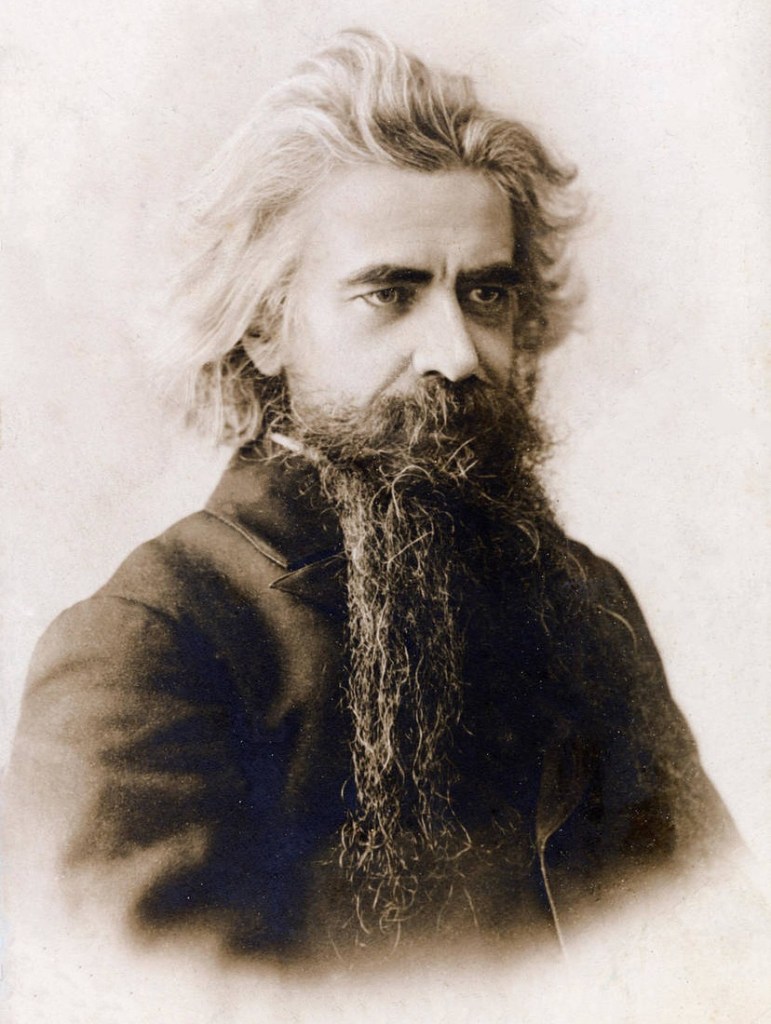
The following post is a development of a series of short notes made on social media.
Key Concepts
● всеединство
Vseedinstvo
Multiplicity-in-unity / unity of all things / pan-oneness; related to sobernost
● Богочеловечество
Bogochelovechestvo
Humanity of God / Godmanhood
● три силы
Tri sily
Three forces; an integrative tertium datur that allows opposites to become ‘undivided yet unmerged’
● София
Sophia
Merciful unifying wisdom of God comparable to the Hebrew Shekinah; the earthyness of Heaven and the heavenliness of Earth
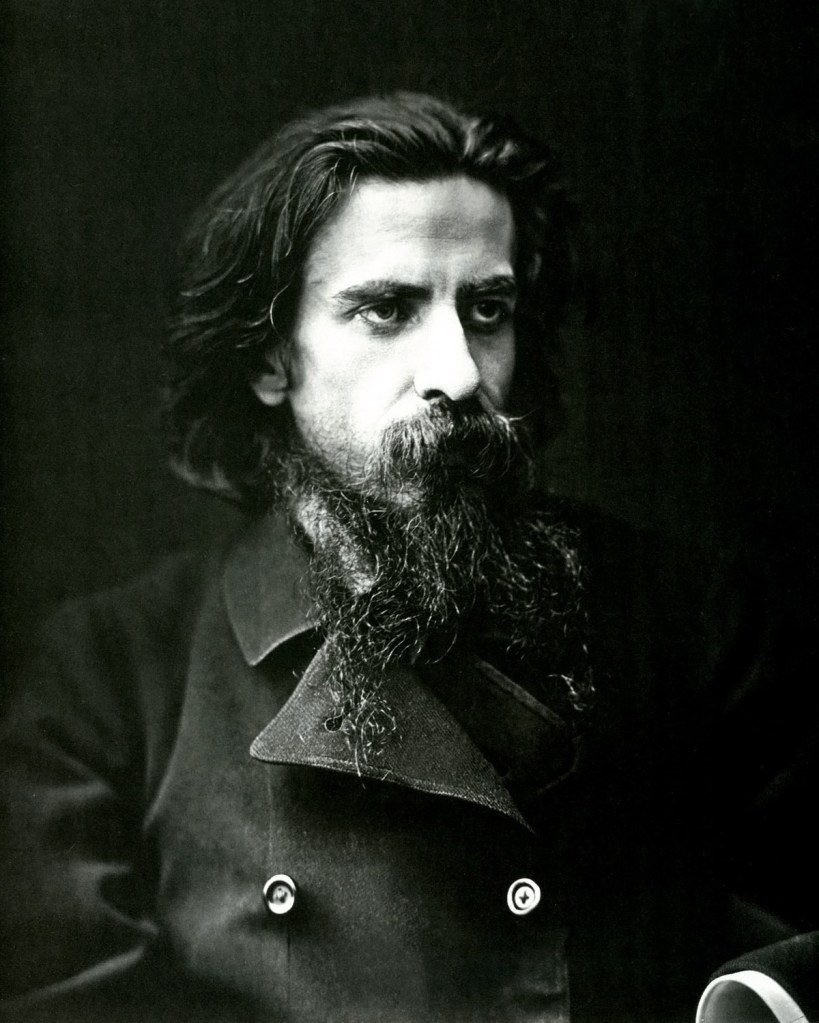
In his foreword to Michael Martin’s The Submerged Reality Aidrian Pabst describes Sophia in terms of a ‘metaxu’, which is a term I have only ever seen used once before, in that case by Simone Weil. Conceptually metaxu is a separateness that brings together, a kind of liminal membrane or contact boundary by means of which communication or relatedness between the dissimilar can occur.
Pabst also notes that Sophiology is predicated on a rejection of the nominalist epistemology of Descartes and Kant and instead relies upon the conceptual realism that flows from Renaissance philosophy, the mysticism of Reformists and post-Reformists and Romanticism. This is good in an interdisciplinary sense for my research; I’m certain that second order axiomatic set-theoretic logic / ontology is dependant on the assumption of conceptual realism: that properties or universals are ‘things’ and can in themselves be counted as elements of a set. This seems to me to be more relevant to contemporary post-continental philosophy than nominalism. I have a sense that Sophiology may exist at that place in theology where continental and analytic philosophy have thus far failed to engage much with each other. But beyond these rather more dry matters I’m aware of how Sophiology may also open onto sacramentalism, and the interpenetration of symbol with symbolised, which is where my interest as an iconographer and historian of western mysticism really lies.
In my initials thoughts I wrote,
Conceptually ‘metaxu’ appears to do the same work for Pabst and Weil as ‘Tri sily’ (the third force) does for Solovyov. Here I also defer to C.S.Lewis’ lectures on the medieval use of the tertium datur – it being inconceivable that an ontological gulf between two terms like creator and creation, or for that matter Being and beings, could be in any way spanned without some third term being able to ‘touch’ both sides of the Ontological Difference.
My notes on Facebook, published 13th October 2023, available here
This turns out to be too hasty. While Solovyov’s concept of three forces, one of which acts as an integrative force between two others, is indeed comparable to the role of the tertium datur in Lewis’s essay ‘Transpositions’, and which it put me in mind of, this affinity muddies the water somewhat when trying to grasp the rôle of Sophia in Solovyov’s Sophiology. What Lewis notes, in both this essay and his monograph The Discarded Image, is the medieval tendency not to tolerate certain kinds of cosmological duality wherein two realms or classes of beings are left facing each other. This reluctance to conceptualise such a divide leads to the insertion of a mediating term, a middle ‘third’. However, this supplementarity is precisely what Sophia cannot consist in. Pabst says of Sophia’s articulatoon that,
[W]isdom is neither a tertium quid nor a fourth divine person, but rather the very middle between divine transcendence and created immanence — as the Russian tradition of sophiology teaches. For nothing can subsist outside God, whether between humanity and God, or between God who was made man and mankind that is destined to be deified. Likewise, Sophia is no third term between the three divine persons of the Trinity — for otherwise persons, relations, and essences would be specific instances of something more general and fundamental than God.
Pabst, A. in Martin 2015:vii
Because Sophia cannot be considered a divine Hypostasis in her own right — which would constitute precisely the heresy Solovyov is sometimes charged with — she must be understood as ‘an ineffable communication between them that exceeds the grasp of human cognition and is accessed experientially’ (ibid.).
This challenges and multiplies my previous understanding of what metaxu can mean. The emphasis here seems to be on the experiential nature of our mode of access to any understanding of Sophia. She is metaxu or ‘middle’, because the Hypostases do have communicative relationships with each other, and thus are mediated, but not ever in a sense which would suggest that She is not coextensive with the divine Persons and their relationships. She is in some way the energy of intercommunication (perichoresis) between the divine Persons of the Trinity, as sensed by, but always beyond, human contemplation.
Yet Sophia is apparently larger in concept than perichoresis, for She is coextensive not just with the Persons and their relationships but with the divine essence in what Solovyov calls a ‘pan-unity’ (vseedinstvo) which ‘envelops the whole of creation and reunites it to God’ (ibid).
Solovyov’s Sophiology — and subsequently Bulgakov’s — however, is no systematic version of pantheism, but represents a theology much closer to Jacob Boehme’s mysticism or the cosmology of the frühromantik movement. These comparisons will be examined in later notes.
Bibliography
- Lewis, C. S. 1964, The Discarded Image: An Introduction to Medieval and Renaissance Literature, Yale
- Martin, M. 2015, The Submerged Reality: Sophiology and the Turn to a Poetic Metaphysics, Angelico

 Theriomorphous